





Product Name: Louis Ghost
Brand: Kartell
Category: Furniture / Armchair
Manufacturer: Kartell S.p.A.
Designer: Philippe Starck
Identification Confidence: High
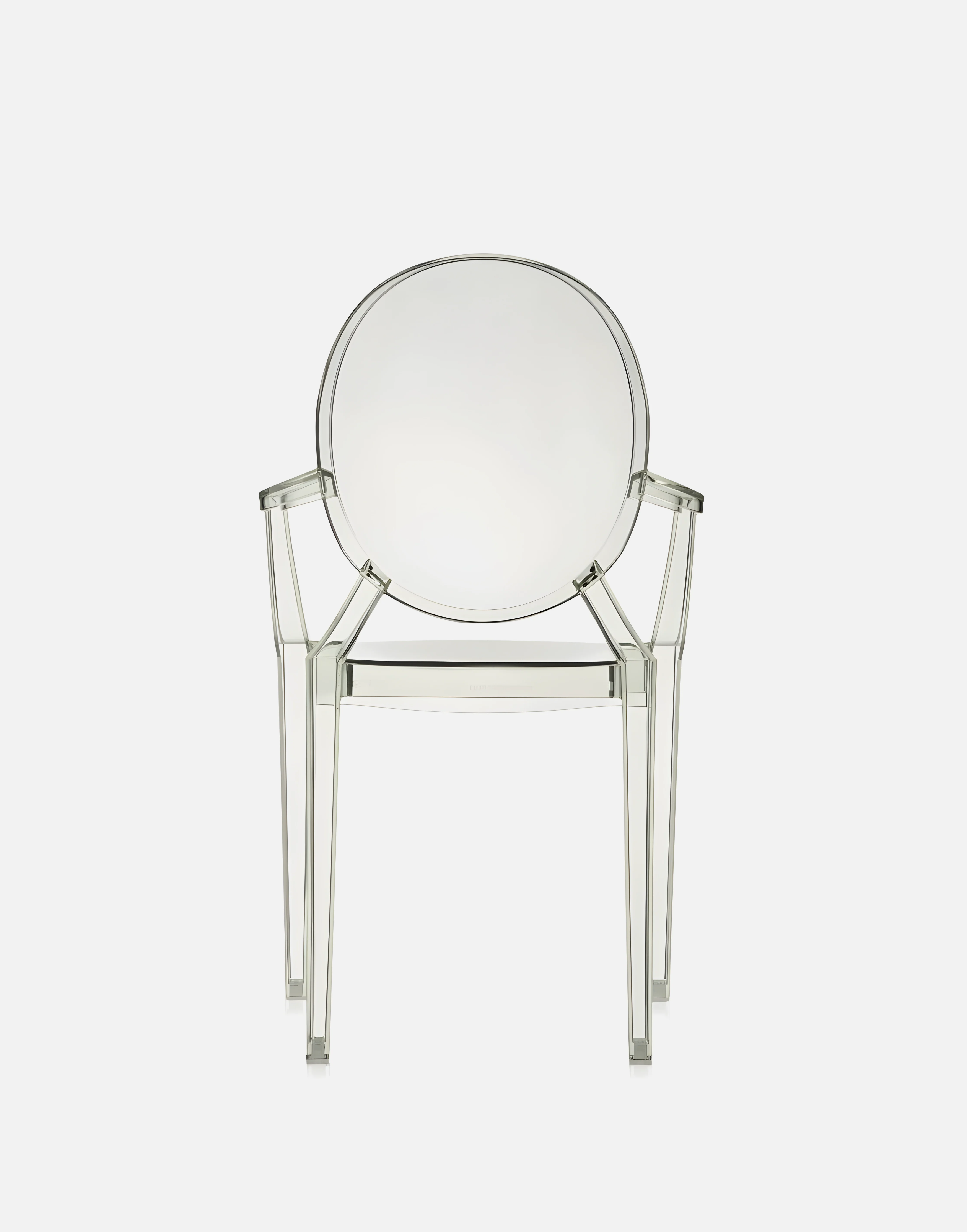
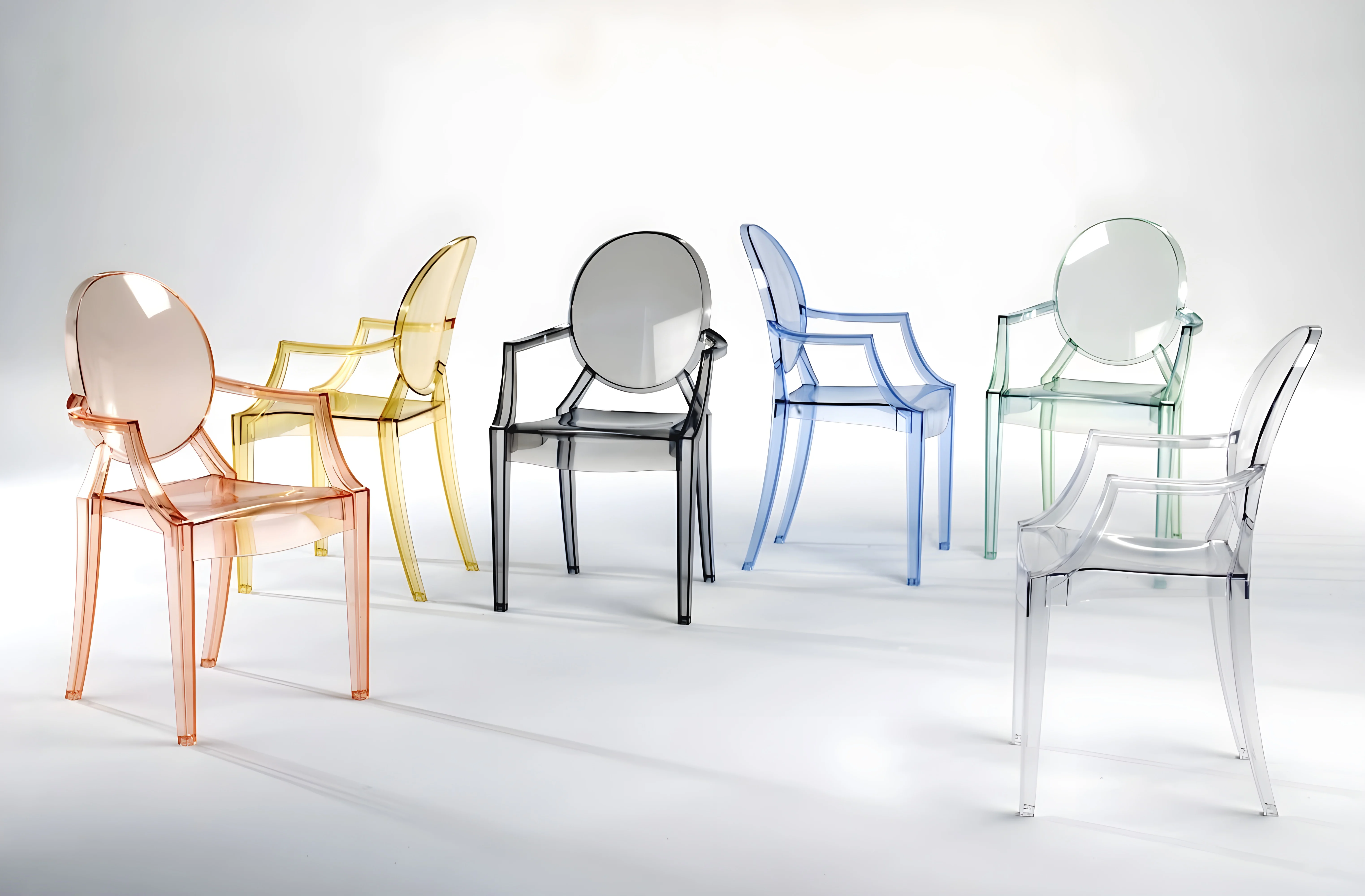
The Louis Ghost Chair's central achievement is well established: it takes the ornate silhouette of a Louis XVI armchair and renders it in a single, seamless piece of transparent polycarbonate, preserving the historical proportion and gesture of the original while stripping away every material cue that once signaled "furniture." That reduction is genuinely elegant, and the design communicates its historical reference with real wit across every color and context shown. The difficulty this assessment identifies is functional rather than aesthetic: a chair rendered in fully transparent material is, by design, difficult to perceive in the everyday environments it is meant to occupy. Across the submitted images, the chair recedes into doorways, tabletop reflections, and richly patterned interiors to the point of near-invisibility from several angles — an effect that is celebrated as a design conceit but works directly against a basic expectation of furniture: that a person can reliably see it before approaching or moving through a space. This is a design whose central idea is also its central limitation.
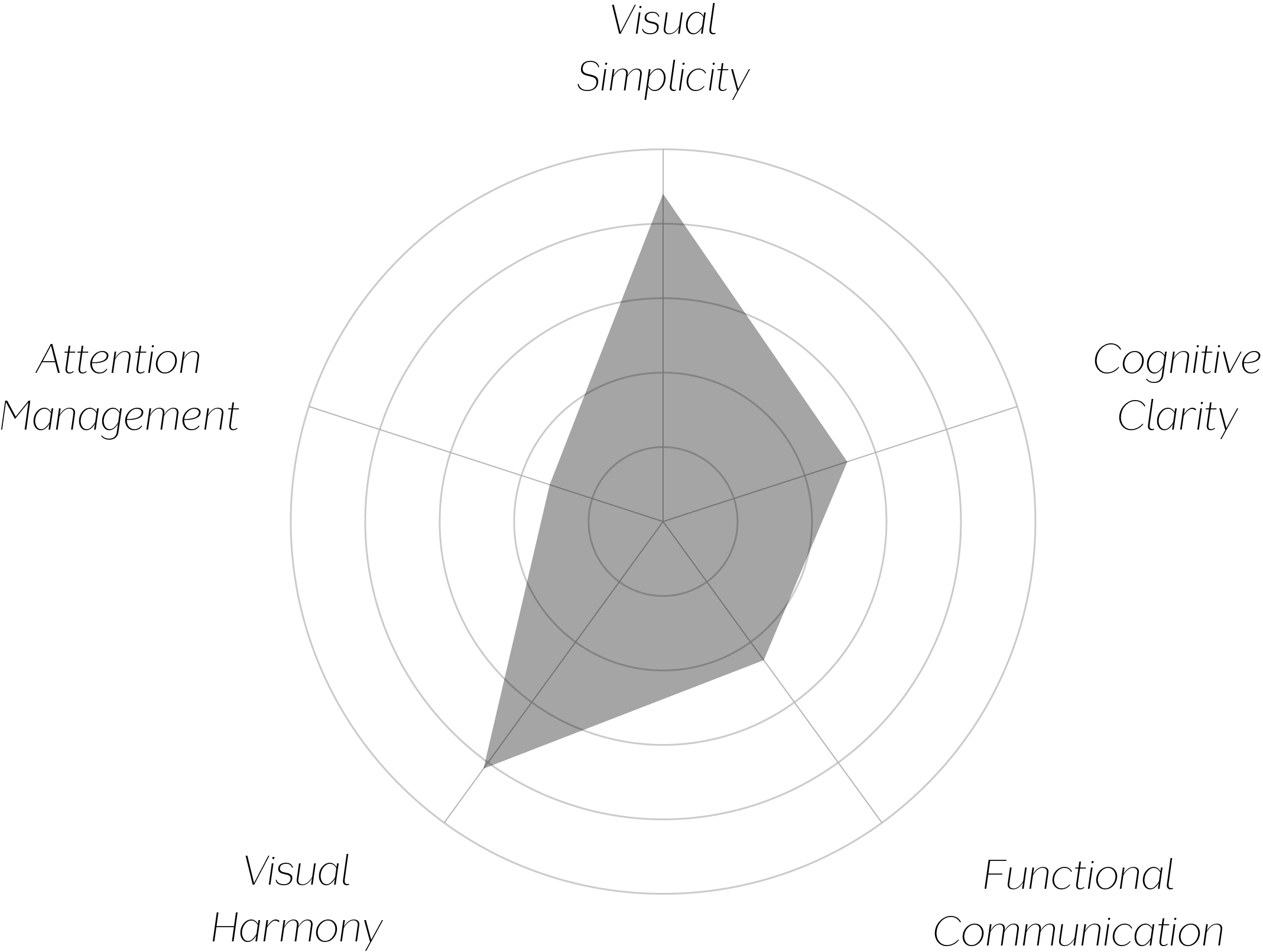
Vand Score 60/ 100
Performance across the five core Vand assessment dimensions.
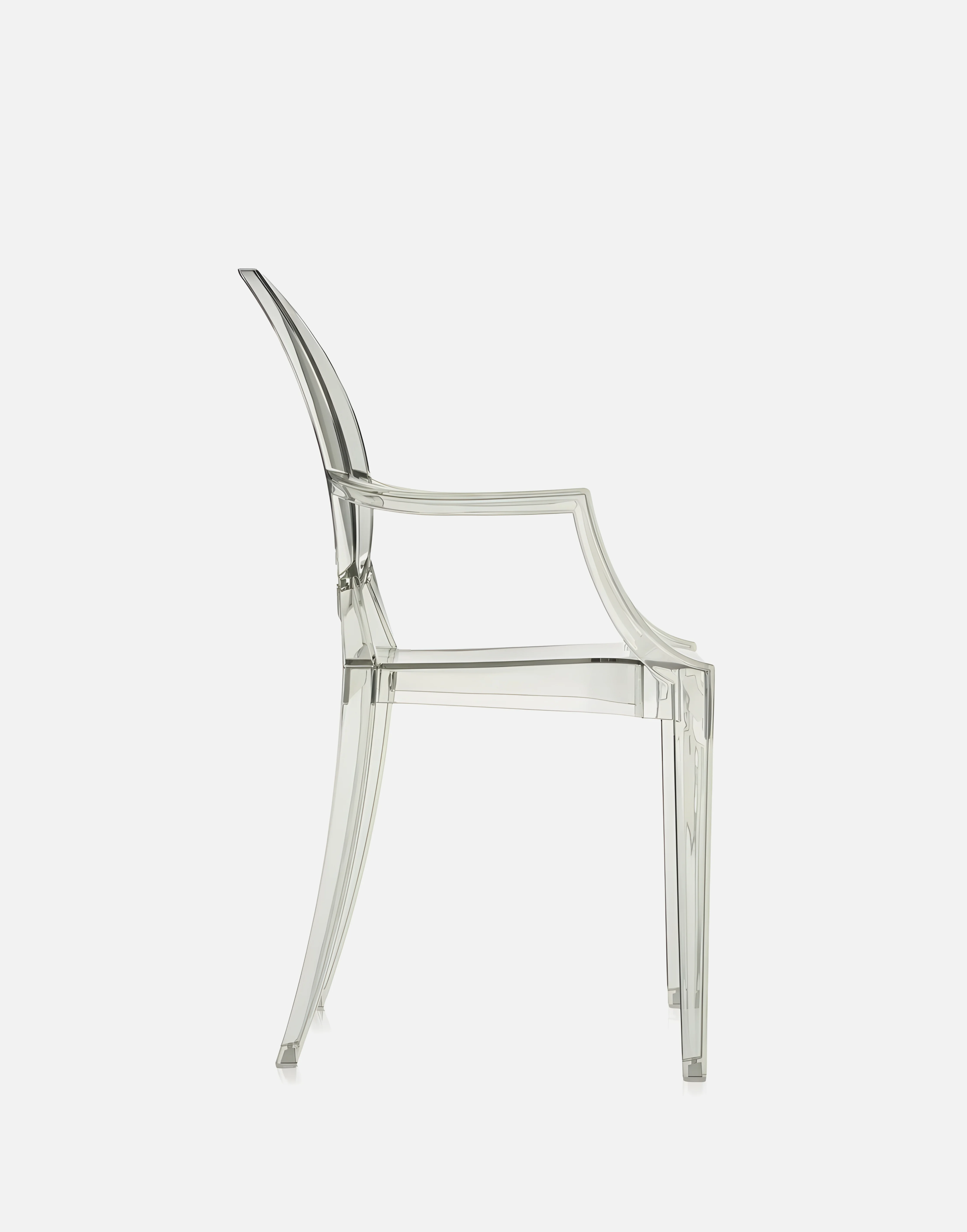
The Louis Ghost demonstrates, with real conviction, that a historical form can be fully preserved while every material signal of that history is stripped away — proof that silhouette alone can carry a reference without ornament, upholstery, or applied detail. Few designs execute this kind of quotation this cleanly.
At the same time, the chair is an instructive case study in a specific kind of design trade-off: total material transparency, pursued as an aesthetic and technical achievement, can come at the direct expense of a functional object's most basic job — being reliably seen. The elegance of "disappearing" furniture and the practical need for furniture to be visible are, on the evidence of these images, genuinely in tension rather than reconciled.
The jury does not dispute the formal accomplishment of this design — the reduction of an ornate historical silhouette into a single transparent gesture is genuinely elegant, and it is easy to understand why this object has become a design icon. But VAND Certification asks whether a design respects the person who encounters it, and a central part of that respect is simply being reliably visible in the spaces it occupies. Across the settings shown here, the chair's defining transparency repeatedly works against that basic expectation, at times to the point of near-disappearance.
An object this confident in its own reduction deserves an equally confident answer to a simple question: can the person who needs to sit down actually see it first?