






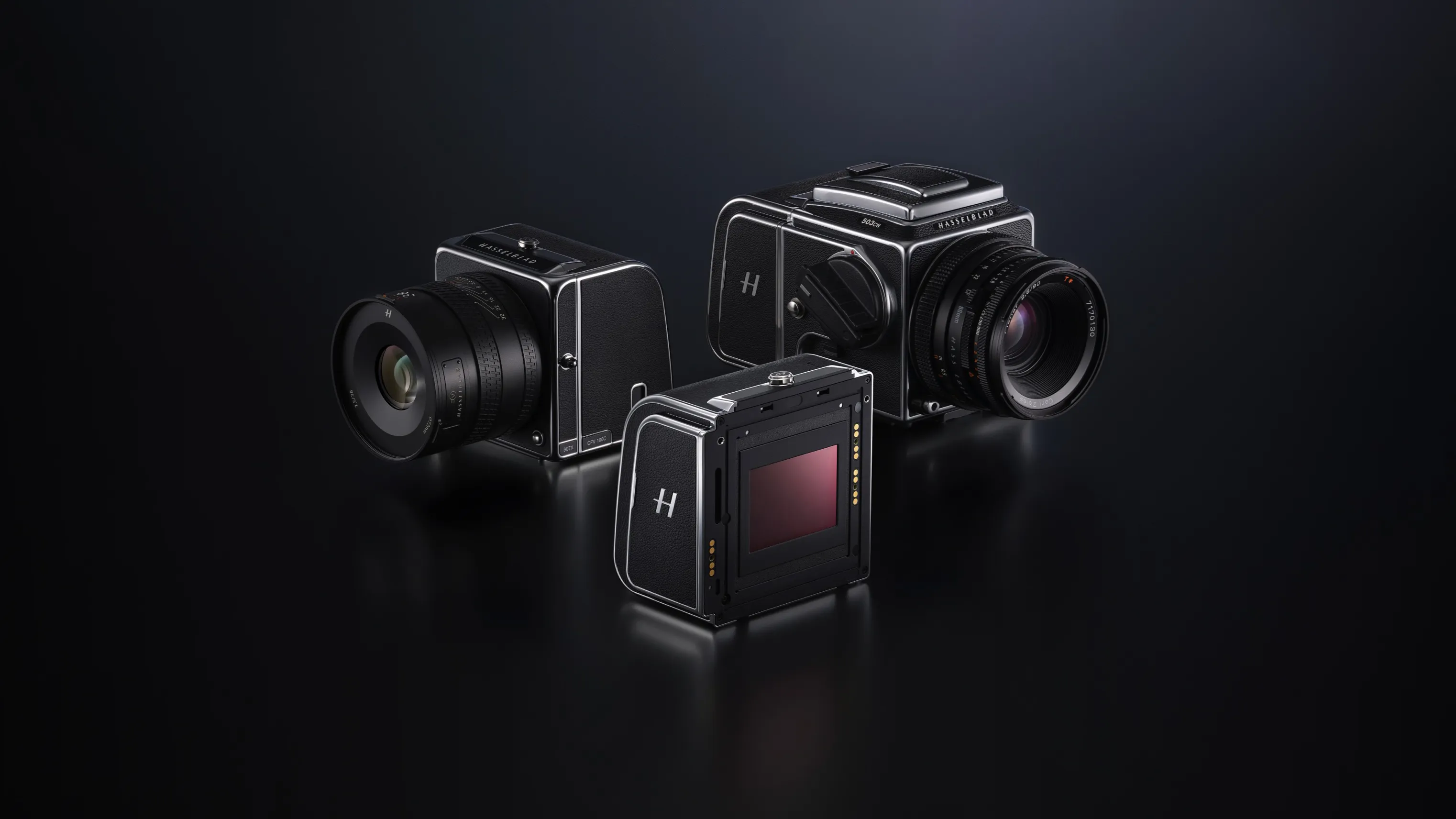
Product Name: 907X & CFV 100C (with XCD 2.5/38 lens)
Brand: Hasselblad
Category: Modular medium-format digital camera system
Manufacturer: Victor Hasselblad AB
Designer: Hasselblad in-house design team; body proportions and modular concept trace to Sixten Sason's original 1948 Hasselblad camera design
Identification Confidence: High — corroborated by multiple independent manufacturer and retailer sources.
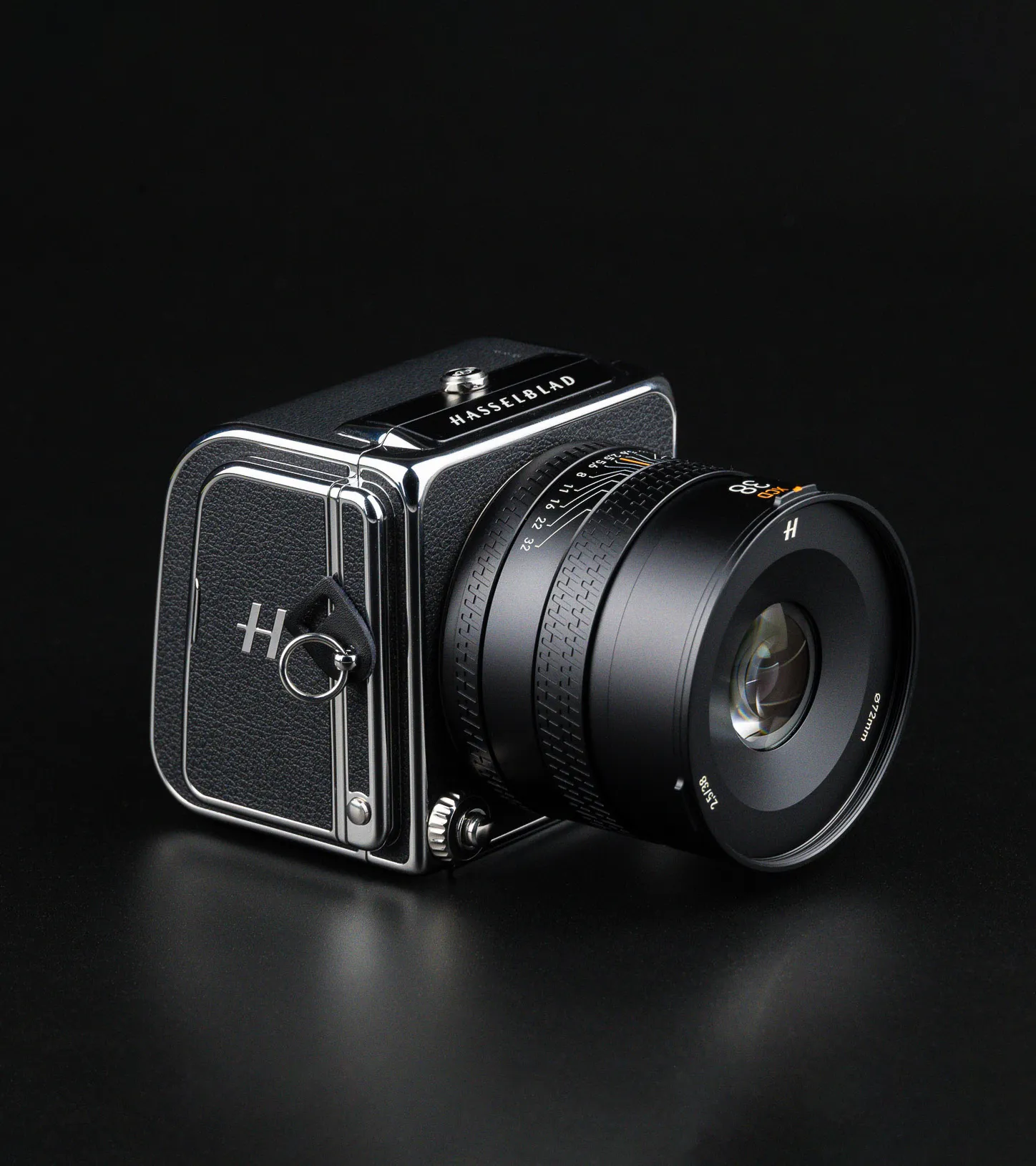
A design lineage stretching back to 1948, carried into a modular digital system where every printed lens marking and leather-wrapped surface still speaks the language of a mechanical instrument.
The 907X & CFV 100C wears its seventy-plus years of heritage with real discipline: a boxy, leather-wrapped body, chrome trim at every edge and release, and a lens barrel dense with engraved aperture and distance markings all continue a visual language established by Hasselblad's classic V-System rather than one invented for a modern sensor. Nothing about the body pretends to be a smaller, quieter camera than it is — the proportions are frankly boxy, the leather texture is deliberately tactile, and the printed lens data is left fully exposed rather than hidden behind a digital readout. This is a design that trusts its own history enough to carry a modern 100-megapixel sensor without needing to look contemporary to justify it. It certifies in the A class for a system whose every visible surface, digital or not, still speaks the same confident, mechanical language.
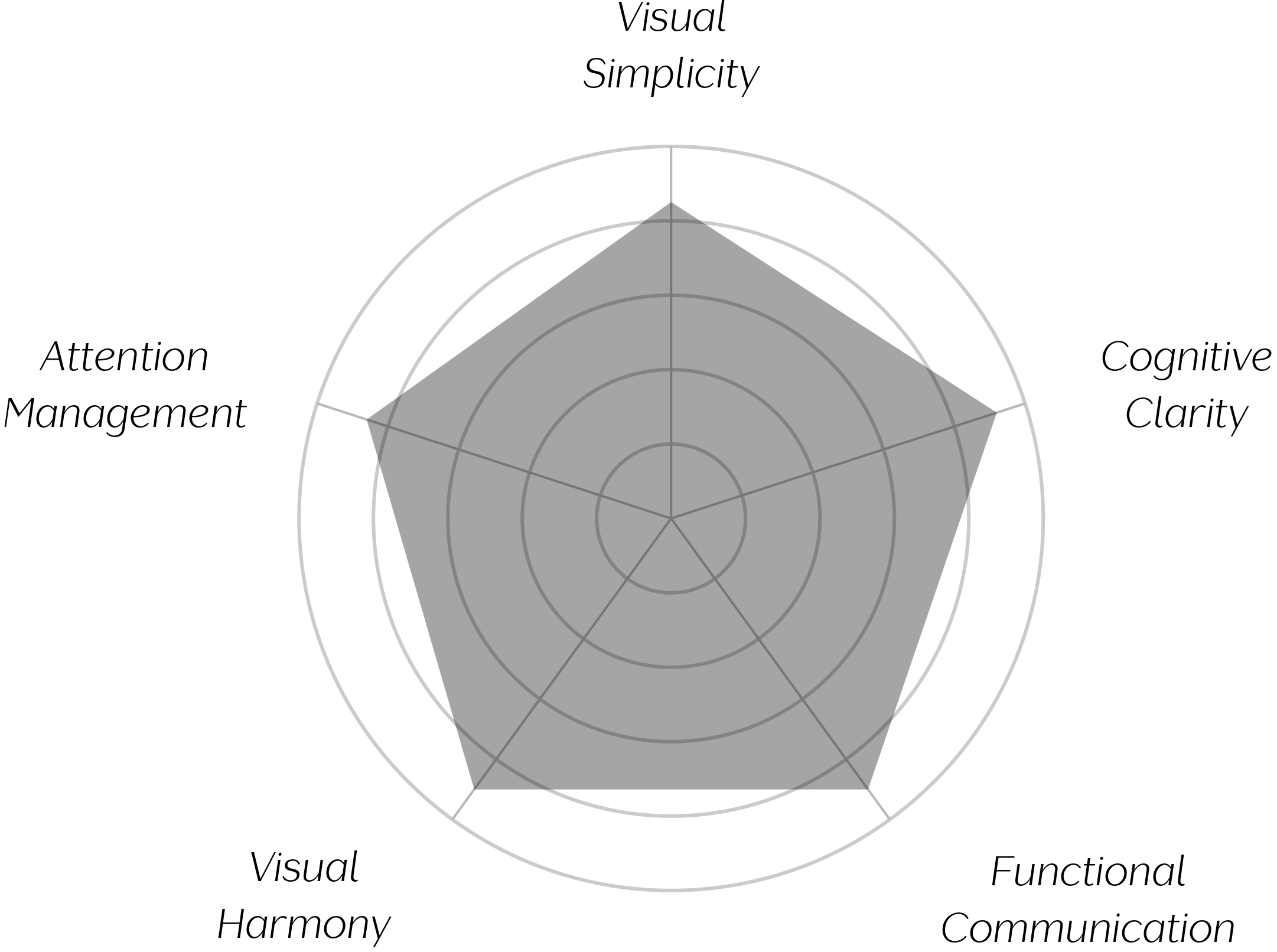
Vand Score 89 / 100
Performance across the five core Vand assessment dimensions.
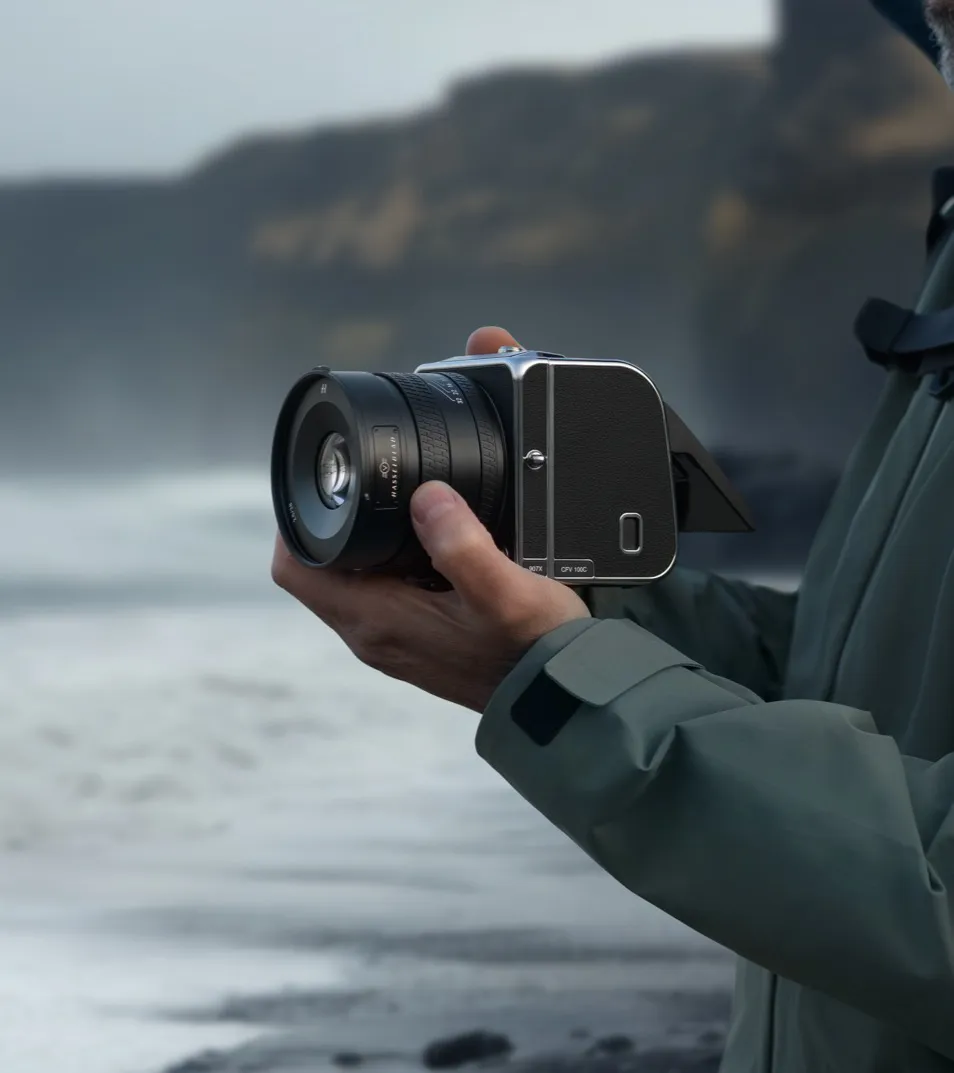
This system demonstrates that a camera's operating logic — not just its silhouette — can be treated as heritage worth preserving: engraved aperture rings on a digital lens carry forward decades-old manual-photography conventions rather than replacing them with a touchscreen equivalent.
It also shows that a genuinely modular system (detachable digital back, interchangeable lenses) can still read as one unified object, provided the material language — leather, chrome, knurled metal — is applied with real consistency across every component.
Most instructively, the design proves that visual restraint at the body and real informational density at the lens can coexist within one object, letting each component's complexity match its actual functional importance.
The evidence supports certification at Class A. The 907X & CFV 100C earns its place by treating seventy-plus years of design heritage as active operating logic, not passive nostalgia — its engraved lens markings genuinely function the way a manual lens's markings always have, and its waist-level flip screen genuinely revives, rather than merely references, classic Hasselblad handling. Its leather-and-chrome material language is consistent across a body, a digital back, and a lens that are, mechanically, quite different components. This is a system confident enough in its own history to build a modern sensor into an unmistakably classic shape and classic handling posture, without softening or modernizing either to compensate. It falls just short of the highest scores because a small functional detail — the side door — remains unexplained from this single view. As a closing observation: this camera proves that heritage, done properly, isn't a finish applied to a new object — it's an operating logic and even a shooting posture old enough to still work exactly as intended.