




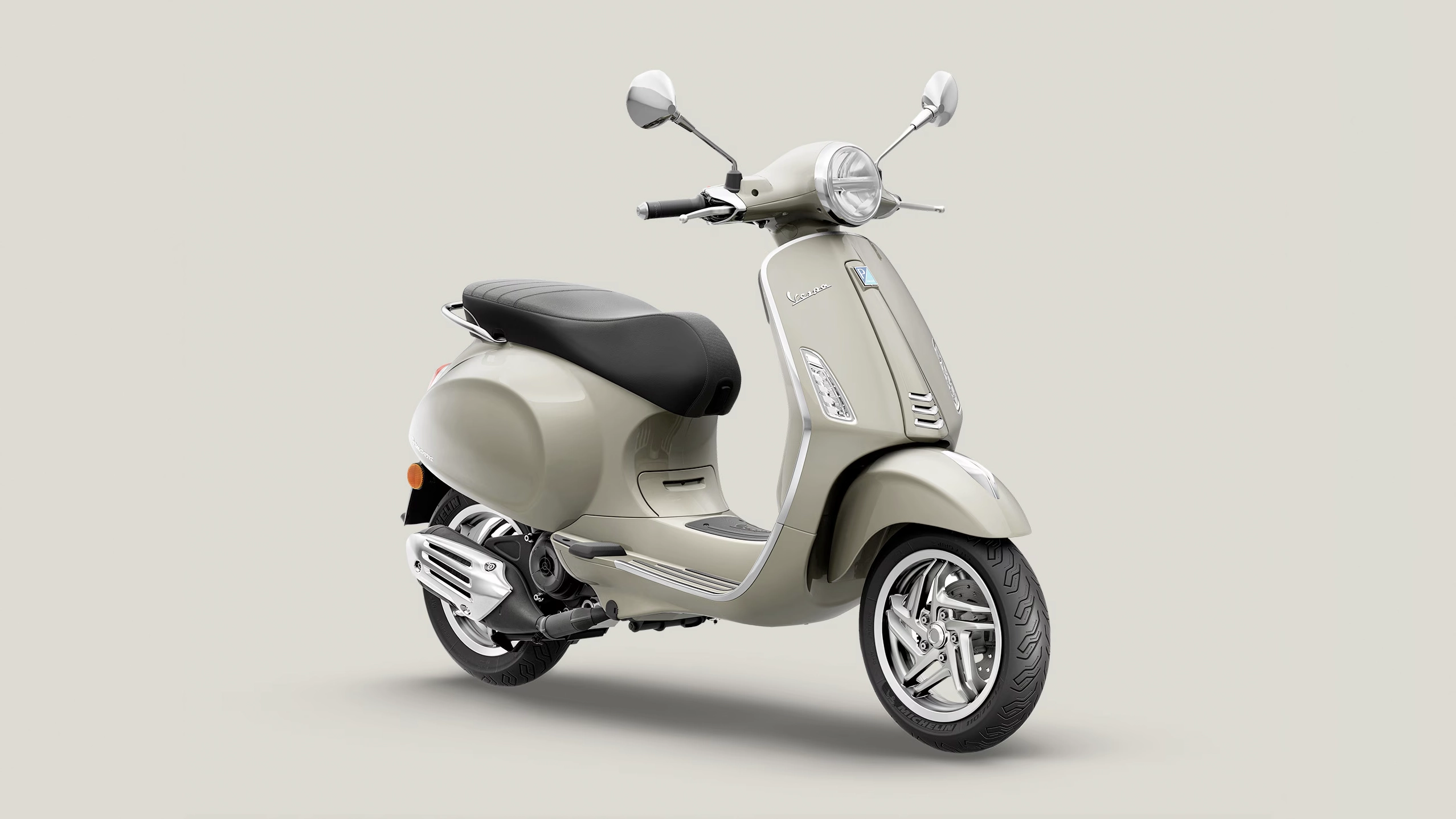
Product Name: Vespa Primavera
Brand: Vespa (Piaggio)
Category: Motor scooter
Manufacturer: Piaggio & C. S.p.A.
Designer: Original Vespa design by CorradinoD'Ascanio (1946); the Primavera line continued by Piaggio's in-house CentroStile design team
Identification Confidence: High— corroborated by multiple independent manufacturer and design-history sources.
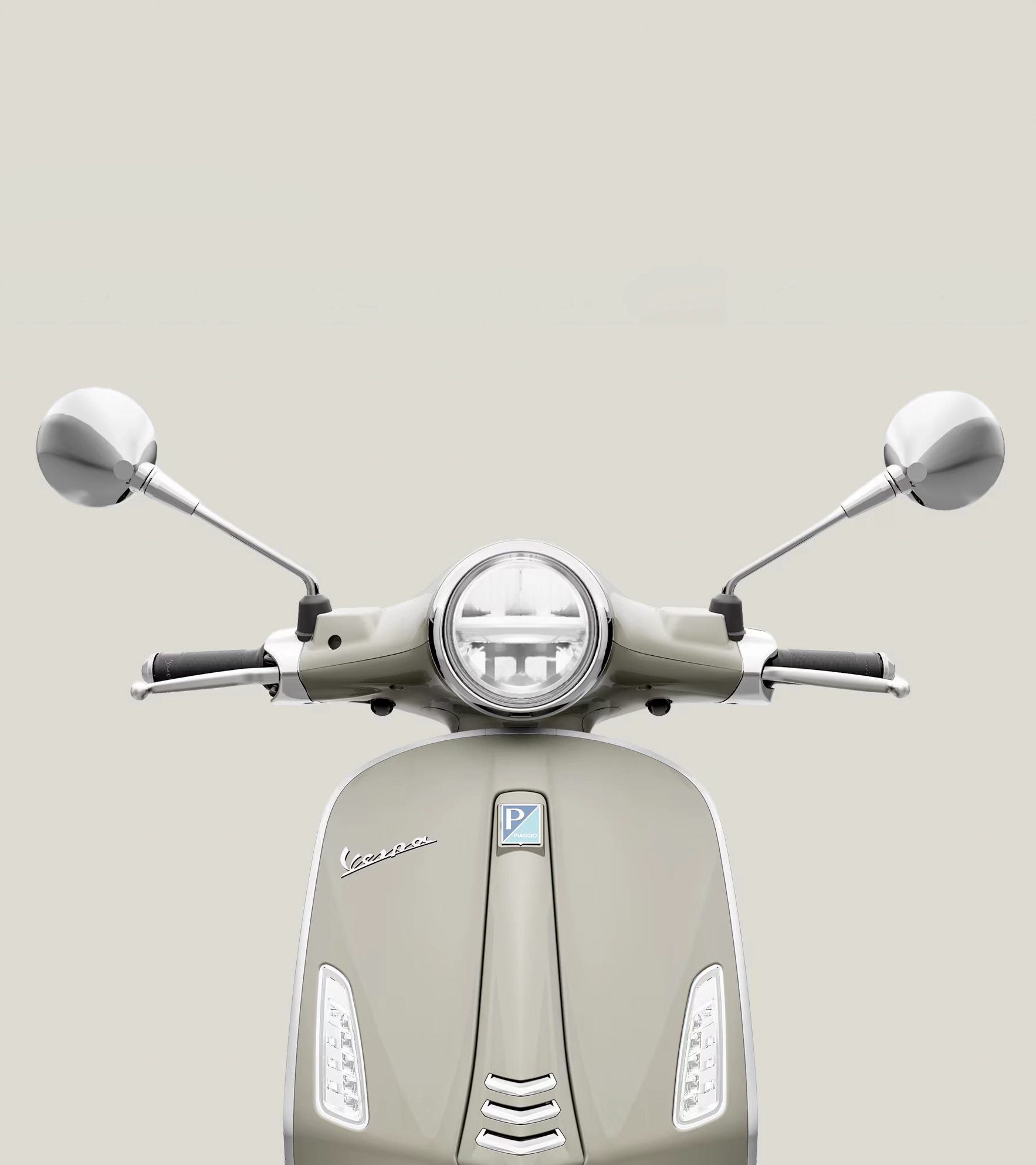
A monocoque body descended fromaircraft engineering, whose every chrome accent still marks a genuinestructural or mechanical decision rather than applied trim.
The Primavera continues one of the most successfulformal ideas in transportation design: a single continuous steel body shell,its curves derived from load-bearing structure rather than decorative styling,wrapping the mechanical components entirely out of sight. That body tracesdirectly back to Corradino D'Ascanio's 1946 original, whose aircraft-engineeringbackground produced a scooter with no exposed chain, a cantilevered front wheelborrowed from aeroplane undercarriage design, and handlebar-mounted controls —solutions that remain legible in this modern iteration's proportions eventhough the specific mechanicals have changed. Chrome trim is applied with realrestraint, appearing only at genuine structural or functional high points: theheadlight ring, the mirrors, the front wheel guard, the rear luggage loop.Nothing about the design reads as applied decoration for its own sake. This isa design whose visual identity and its engineering logic have never fullyseparated, and it certifies in the A class for that rare, sustained coherence.
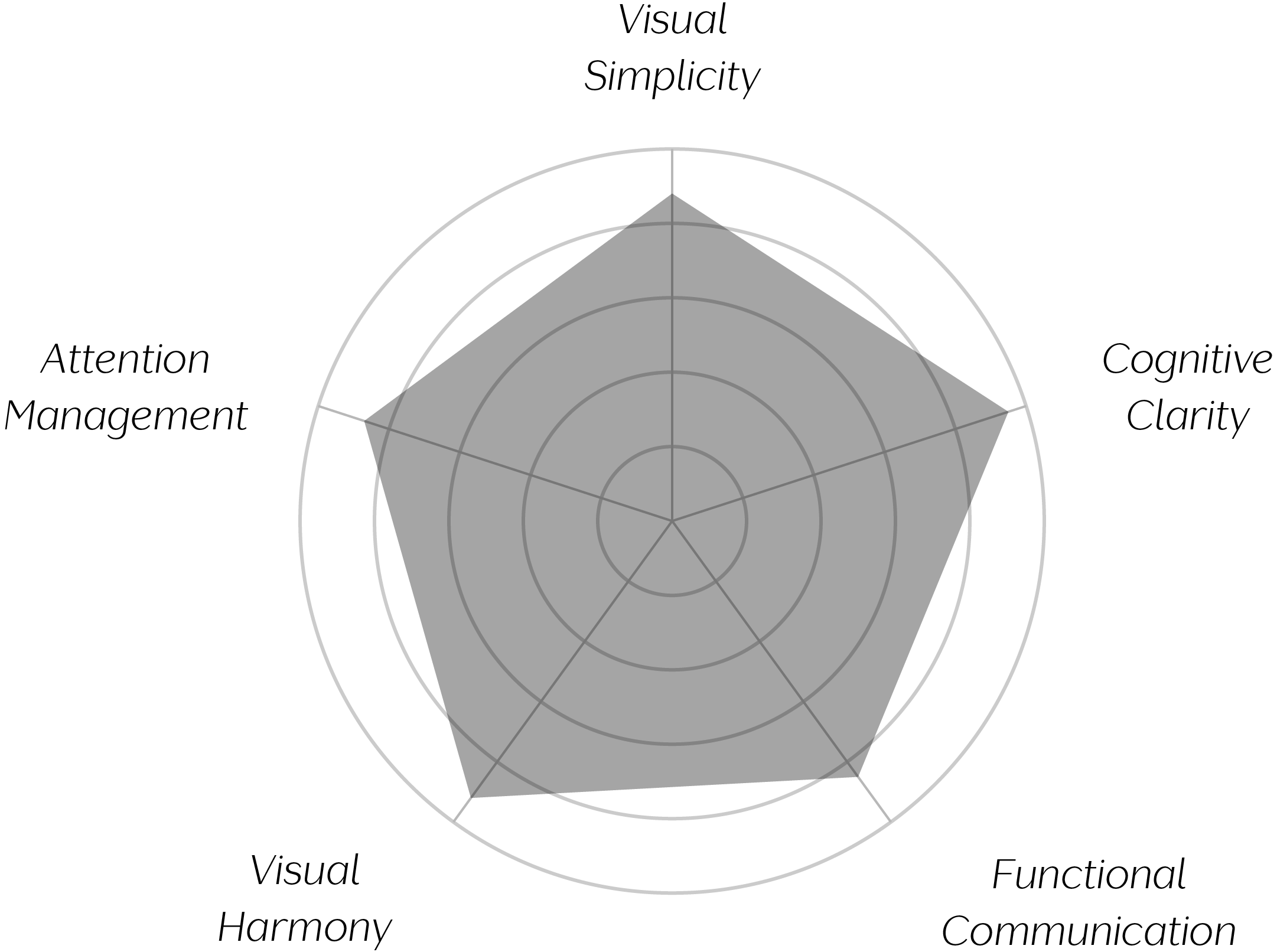
Vand Score 89 / 100
Performance across the five core Vand assessment dimensions.
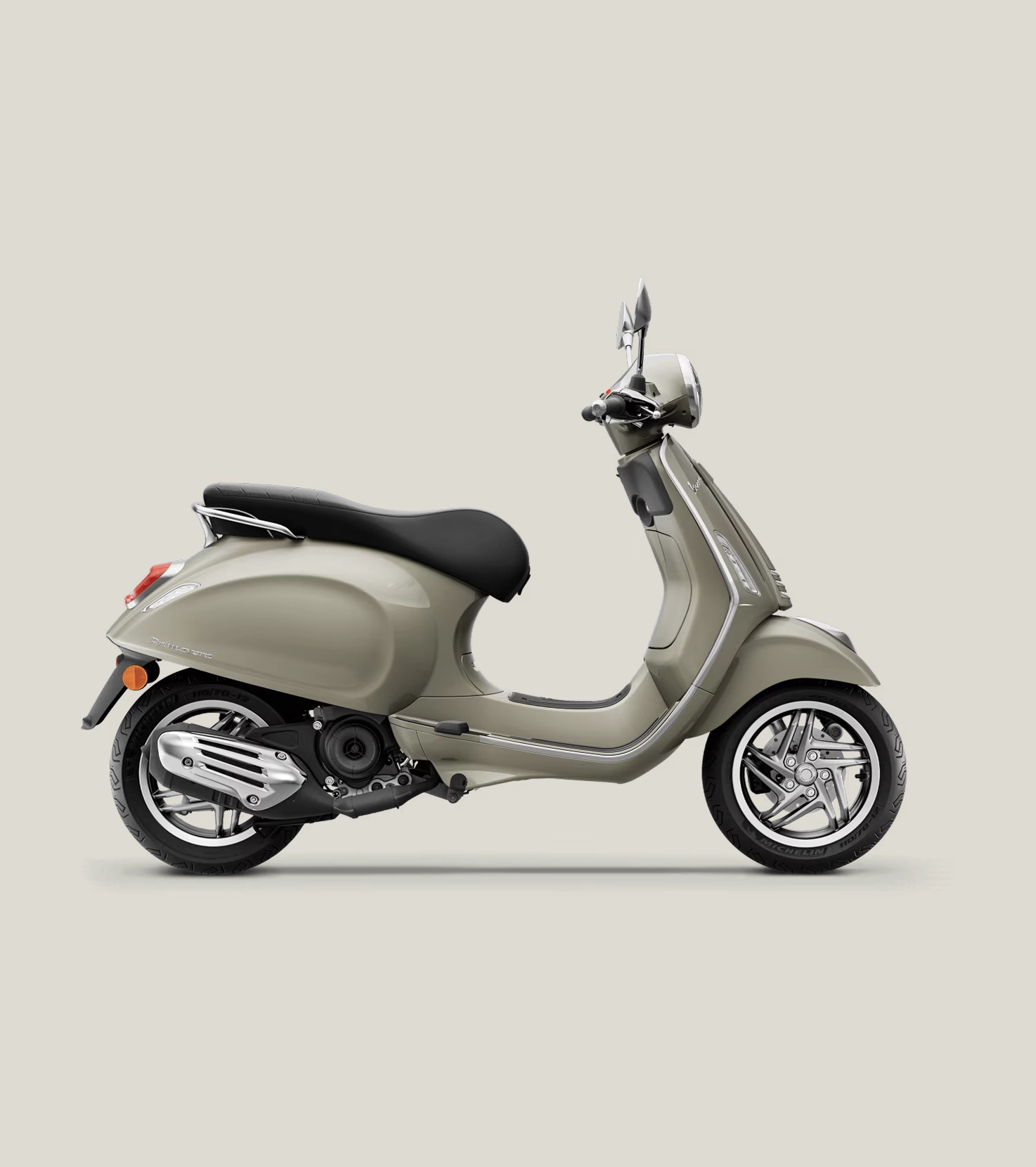
The Primavera demonstrates thata design's engineering origin story can remain legible generations later — thecantilevered front wheel and enclosed monocoque body, both born fromD'Ascanio's aircraft background, are still visible as structural logic in athoroughly modernized vehicle.
It also shows that chrome trim,so often used as generic 'premium' signaling in vehicle design, can instead bedeployed as a strict functional code — applied only where somethingstructurally or mechanically real is happening beneath it.
Most instructively, the design proves that a silhouetteresolved once, with enough discipline, can outlast the specific technologybeneath it — this body shape has now accommodated decades of different enginesand drivetrains without needing to be reinvented.
The evidence supports certification at Class A.The Primavera succeeds by sustaining a design discipline established in 1946: asingle enclosed body shell derived from aircraft engineering, decorated only atpoints where something structurally or mechanically real is actually happening.This is a rare case of a design's origin story remaining legible, rather thanmerely referenced, in a thoroughly contemporary vehicle — the cantileveredwheel mount and enclosed monocoque body are functioning design decisions, notstyling callbacks. It falls just short of the highest scores because some ofthe vehicle's mechanical systems remain entirely concealed, asking the viewerto trust rather than see how they work. As a closing observation: this scooterproves that a silhouette resolved with enough integrity can carry nearly eightyyears of different engines underneath it without ever needing to look like it'swearing a costume.