





Product Name: Topolino
Brand: Fiat
Category: Ultra-compact Electric Quadricycle
Manufacturer: Stellantis (Fiat)
Designer: No publicly verified designer has been identified for this product.
Identification Confidence: High (brand, model, category); Not Applicable (individual authorship)
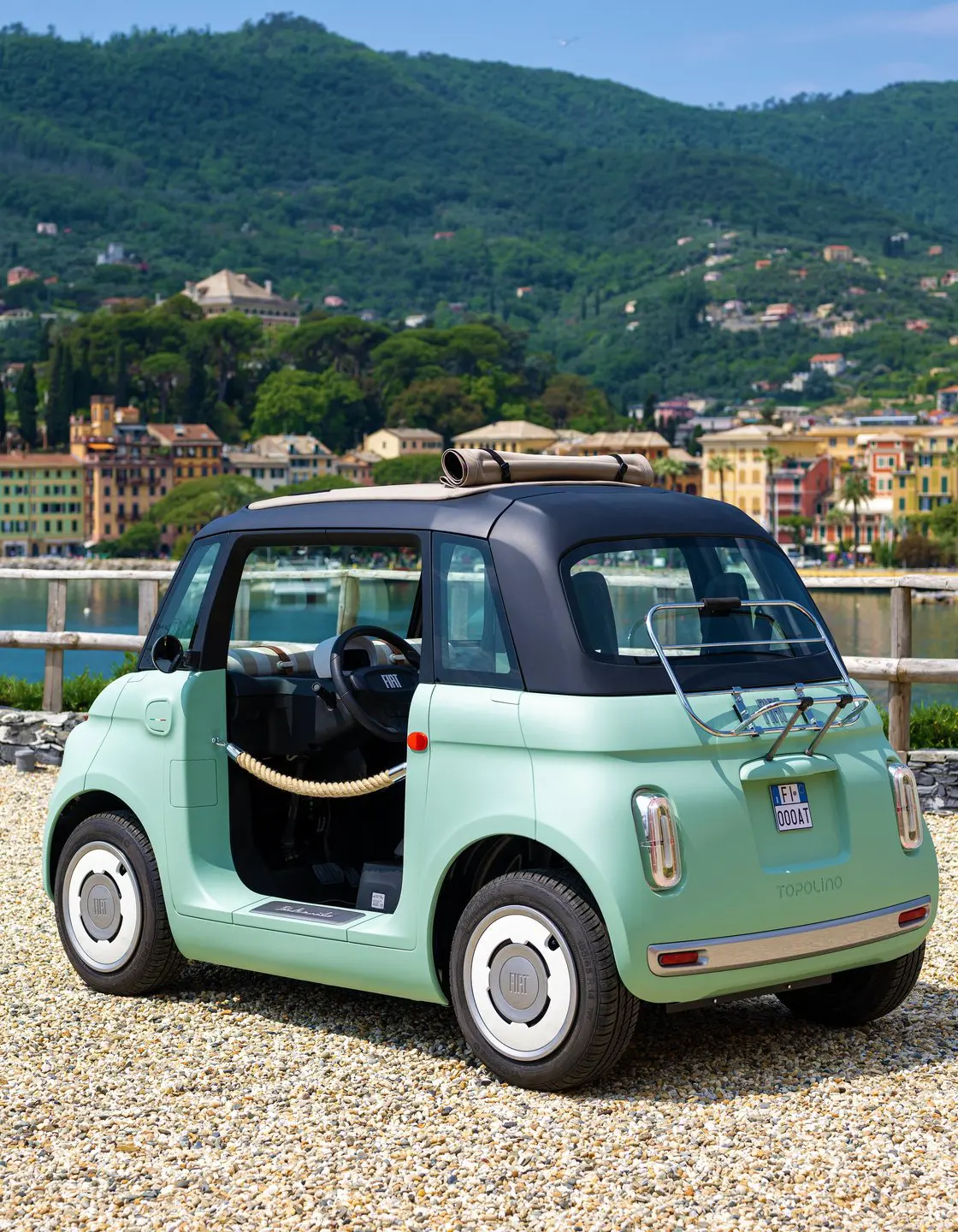
The Topolino is a rare example of a small object that does not try to look important. Its two circular headlamps, single unbroken beltline, and softly domed hood form a single continuous idea, repeated in the rounded taillamp housings and the closed rear flank without a single competing gesture anywhere on the body. There is no cladding to negotiate, no secondary grille language to reconcile, no ornamental crease inserted for the sake of "presence." The open-sided cabin, visible seating, and rope-and-strap detailing are not decoration; they are the honest consequence of the car's stated purpose, and they read as such. Where the design loses a small margin of the highest score is in a few applied elements — the rolled fabric bundle on the roof, the exposed door mechanism — that, while charming, sit slightly outside the otherwise disciplined geometric language. This is nonetheless one of the clearest, most internally consistent designs VAND has evaluated: an object that communicates exactly what it is, at a glance, without asking the viewer to work for it.
Vand Score 90/ 100
Performance across the five core Vand assessment dimensions.
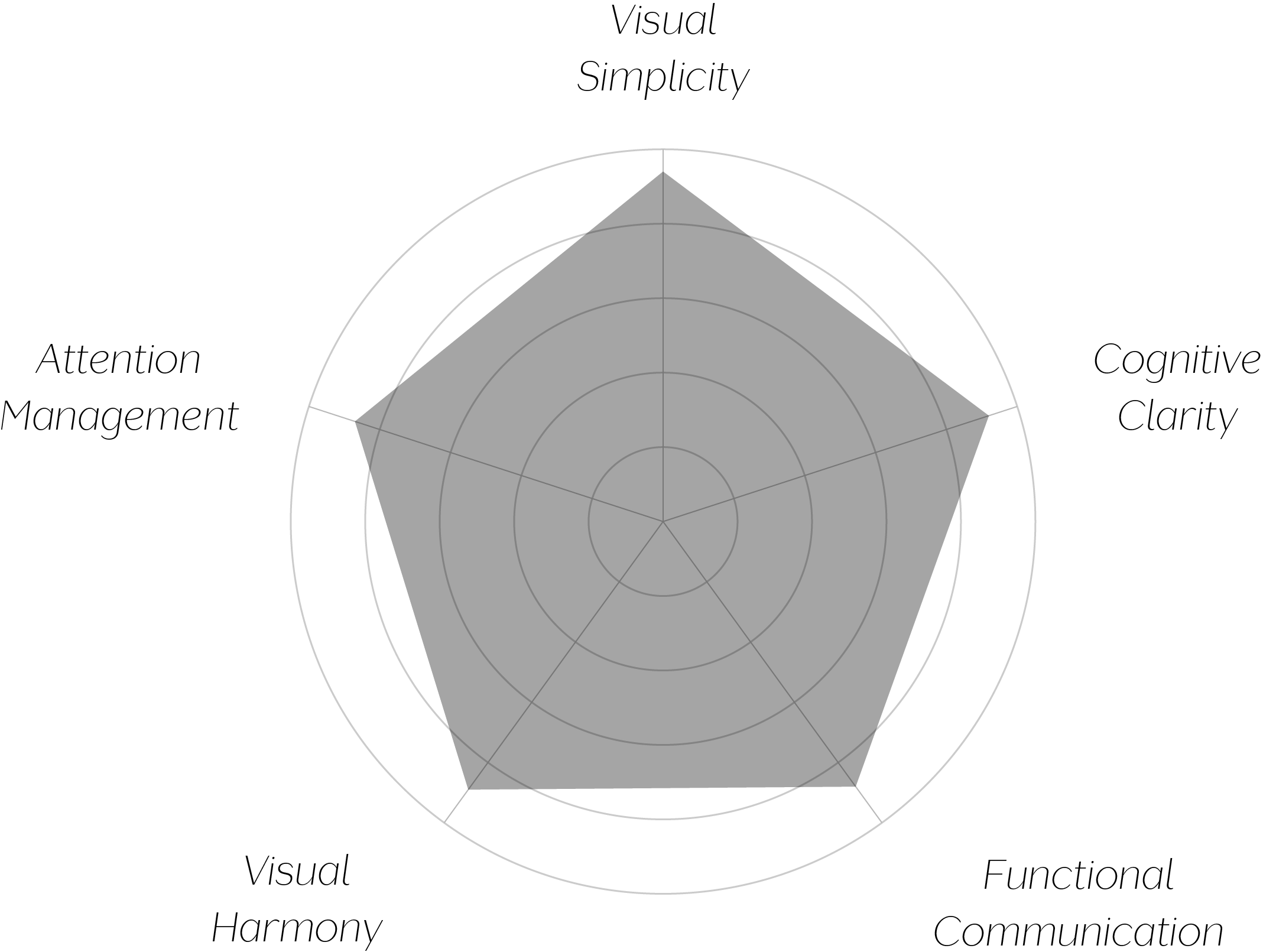
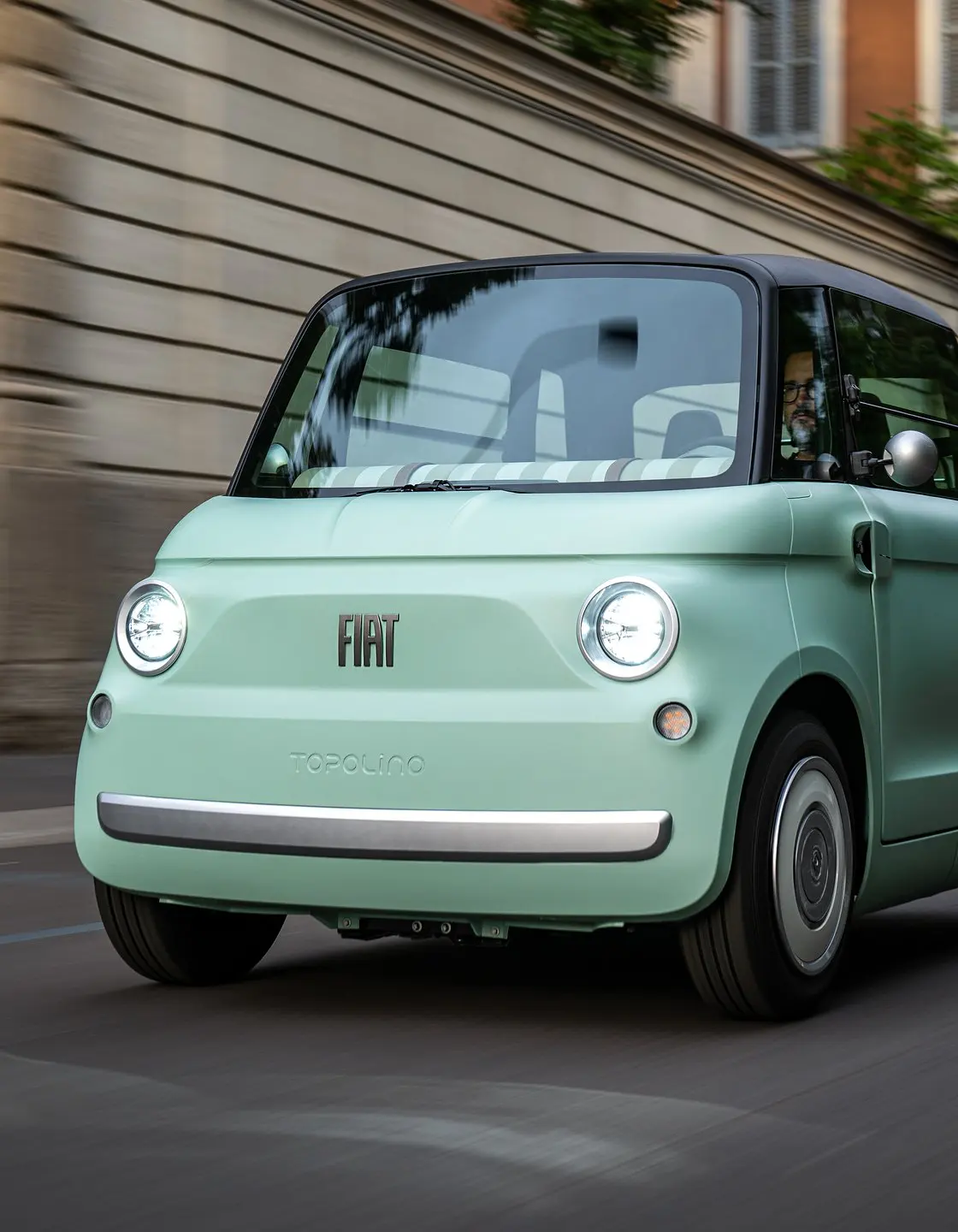
The Topolino demonstrates that restraint, taken far enough, becomes its own form of expressiveness. By refusing every opportunity to add visual complexity — no extra crease, no secondary lamp graphic, no layered bumper — the design achieves a warmth and character that more elaborate small cars rarely reach. Simplicity here is not the absence of a decision; it is the decision.
The design also shows that structural honesty can function as a design language in its own right. Visible seatbelt webbing, an open door aperture, and unconcealed hardware could easily have read as unfinished; instead, applied consistently and without apology, they read as intentional and even charming — proof that transparency about a product's real construction can build trust rather than undermine polish.
Finally, the near-mirrored relationship between the front and rear graphics is a quiet but important achievement. Many designs treat the rear of a vehicle as an afterthought; here, the taillamp housings and rear bumper strip clearly derive from the same formal idea as the front, giving the whole object a sense of having been resolved by a single hand.
The jury's decision reflects a design that does something genuinely difficult: it says a great deal with very little, and it does so without ever breaking its own internal logic. The Topolino's circular vocabulary, carried consistently from headlamp to taillamp, from nose to bumper, gives the object a coherence that few vehicles — regardless of size or price — manage to sustain across an entire body.
Certification is awarded at Class A because the design's few departures from its own discipline — the roof-mounted accessory, the visible hardware — are minor and additive rather than structural, leaving the core statement of the design fully intact. This is a design that trusts its own restraint, and that trust is repaid in clarity.
The most honest designs are often the simplest ones — and the Topolino is proof that honesty, applied consistently, is its own form of sophistication.