



Product Name: Panton Chair
Brand: Vitra
Category: Furniture / Chair
Manufacturer: Vitra International AG
Designer: Verner Panton
Identification Confidence: High
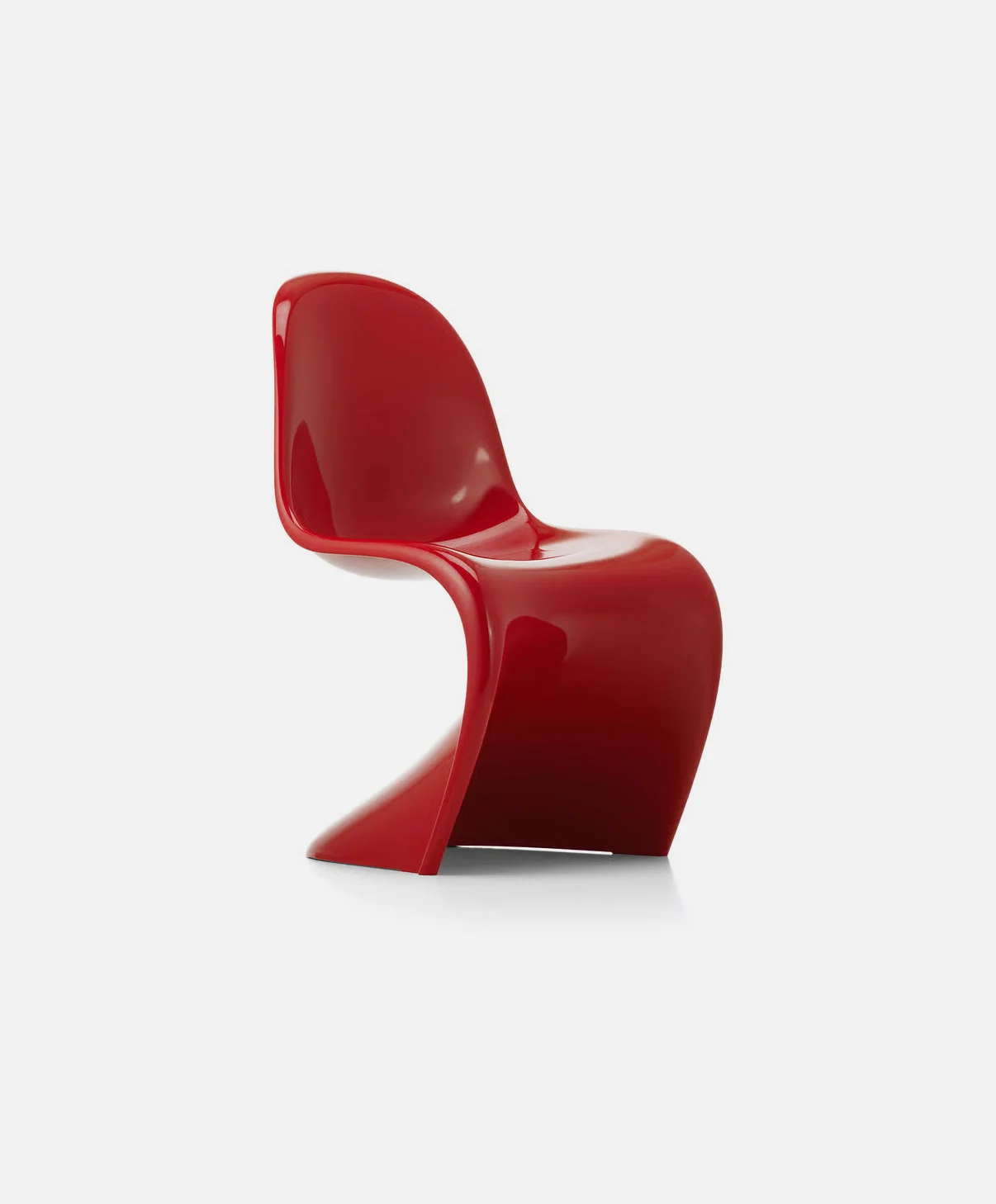
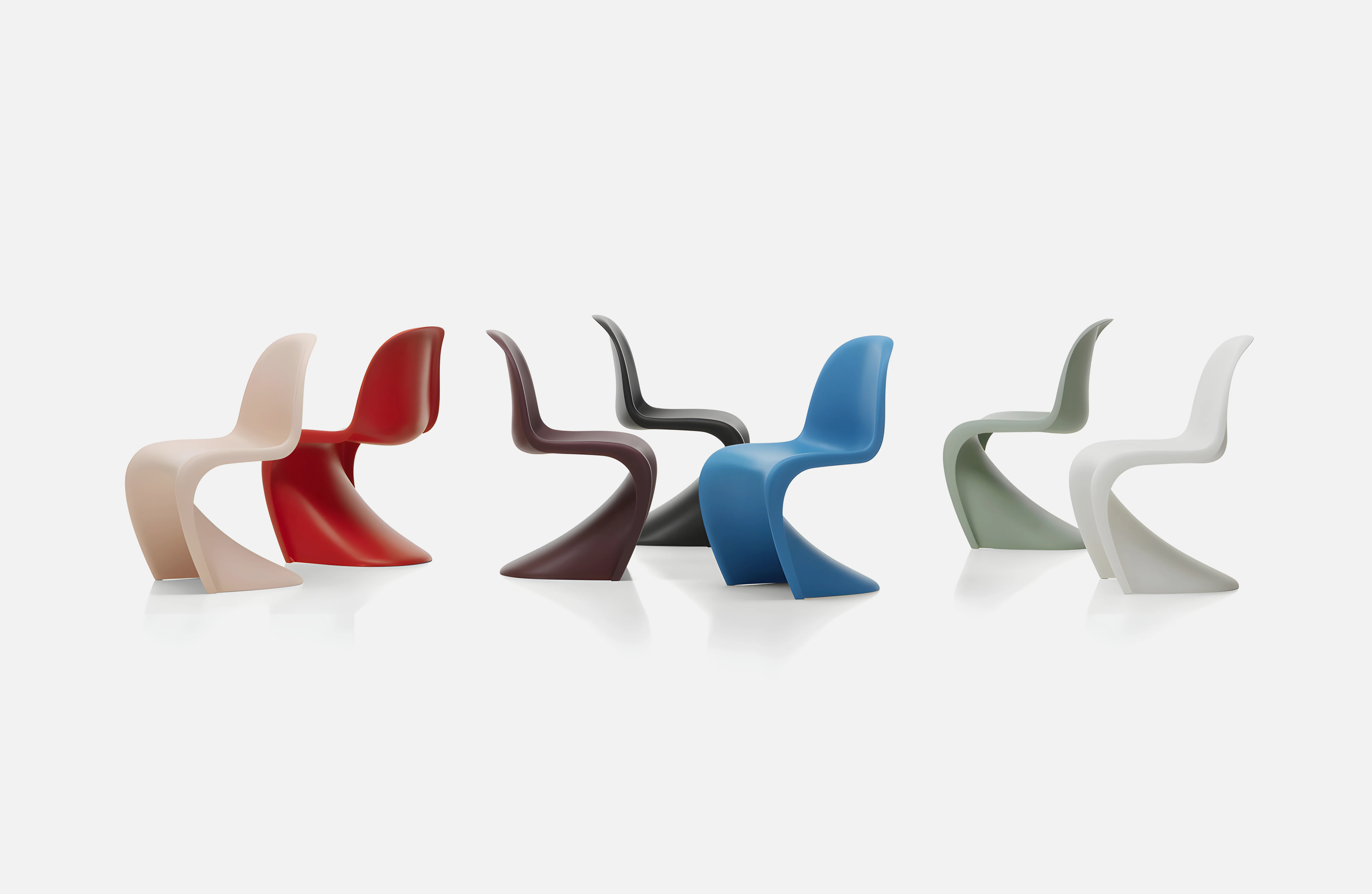
The Panton Chair's defining achievement is well known: one continuous line of molded material, flowing without a single joint or seam from backrest to seat to base, in a cantilevered S-curve that has no legs in the conventional sense. This is a genuinely radical formal statement, and it is executed with real consistency across every color variant shown. The concern this assessment raises is how that form communicates to a person about to sit in it. The chair's entire visual weight rests on a single tapering pedestal that visibly narrows toward the floor, and the seat projects forward from that base with no visible means of additional support — a silhouette that, however structurally sound in practice, reads to the eye as balanced rather than stable. In grouped settings, this effect compounds: rows of identical cantilevered curves create a visually restless, almost precarious composition, particularly where several chairs are angled together. The design communicates sculptural confidence far more clearly than it communicates the basic reassurance a seat should offer at first glance.
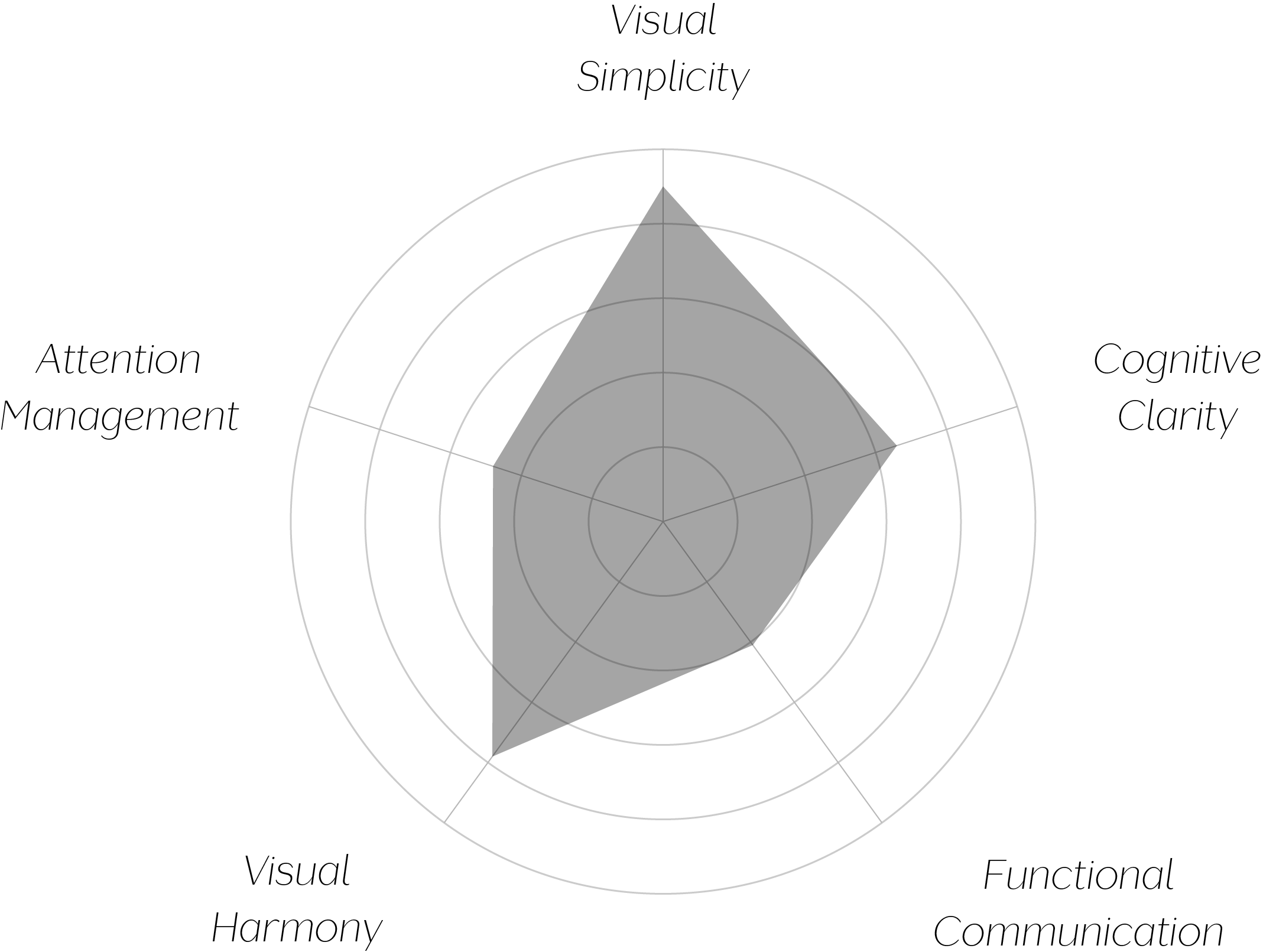
Vand Score 61/ 100
Performance across the five core Vand assessment dimensions.
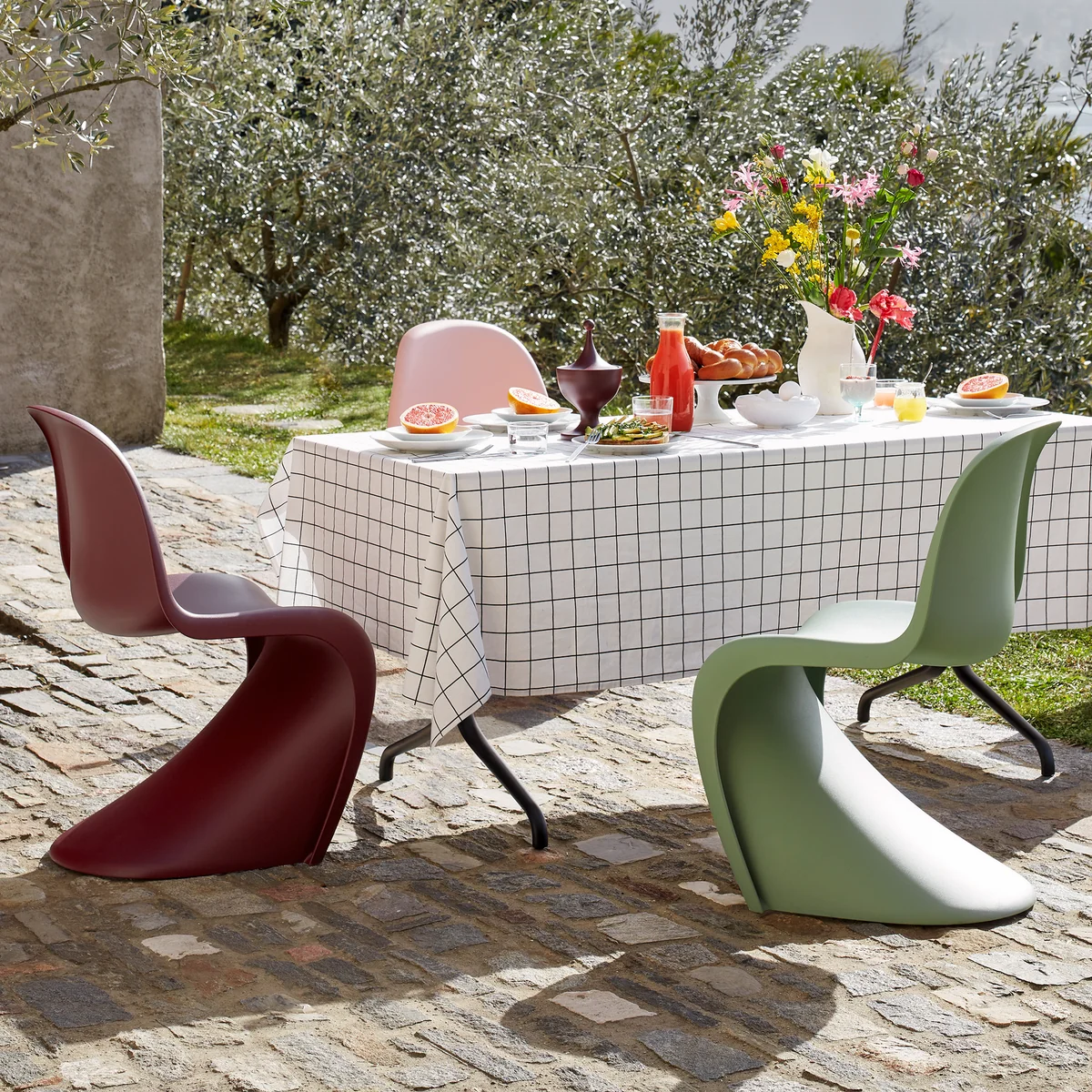
The Panton Chair demonstrates, more clearly than almost any other design object, how far a single formal gesture can be pushed toward abstraction while still functioning as furniture — the complete absence of conventional legs is a genuinely radical statement that has rightly shaped decades of design history.
At the same time, the chair is an instructive case study in the gap between engineered stability and visually communicated stability. A structure can be entirely sound while still reading, to an untrained eye, as precarious — and that gap between what is true and what is perceived is itself a meaningful design consideration, particularly for an object a person must trust with their body weight before they sit down.
The jury does not dispute the historical and formal significance of this design — the single continuous cantilevered gesture remains one of the most radical formal statements in twentieth-century furniture design, and it is executed with real consistency across every variant shown. But VAND Certification asks whether a design respects the person who encounters it, and part of that respect is a visual promise of stability that a seat, more than almost any other object, needs to communicate before it is used. Here, the chair's narrow, unsupported cantilever repeatedly asks the eye to trust an appearance of precarity that its actual engineering does not require.
A form this committed to its own radical idea deserves an equally confident answer to a simple question: does it look, at first glance, like it will hold?