



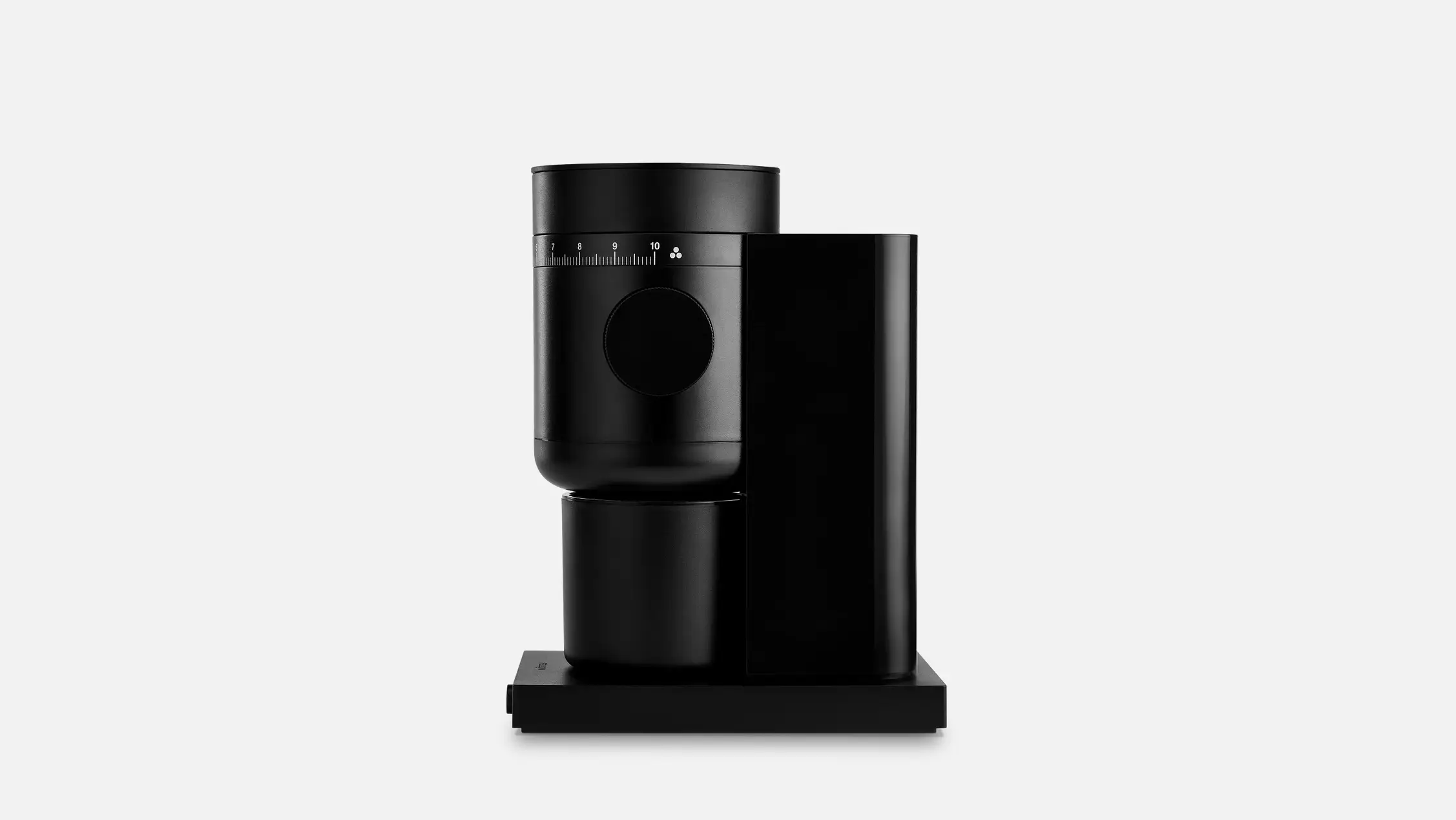
Product Name: Opus Conical Burr Grinder
Brand: Fellow
Category: Electric coffee grinder
Manufacturer: Fellow Products, Inc.
Designer: No publicly verified individual designer has been identified for this product; it is credited to Fellow's in-house design team in San Francisco.
Identification Confidence: High — corroborated by multiple independent manufacturer and press sources.
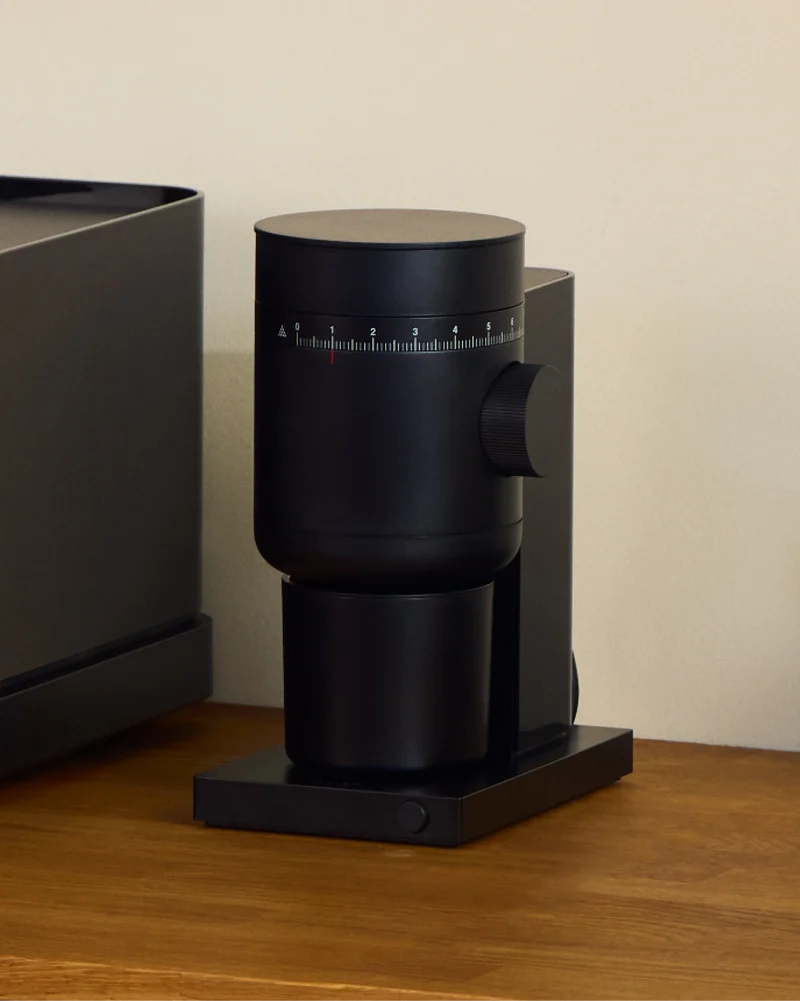
A clearly instrumented object whose accessory kit communicates its purpose well individually, but whose two core volumes speak in slightly different formal languages.
Opus presents itself less as a single sculpted object than as a coordinated system of parts, and it is most successful exactly where that system-thinking shows: the graduated dial on the hopper, the funnel-shaped catch pieces, and the disc-shaped grind guide are each legible on sight, communicating adjustment, capture, and reference respectively without requiring explanation. Where the design is less resolved is in the relationship between its two principal volumes — a ribbed, rectangular back column and a smooth cylindrical hopper — which sit side by side rather than visually resolving into one another. Matte black finish and consistent detailing across every accessory do a great deal to unify what could otherwise read as a loose collection of parts, and the overall impression is of a considered, function-first design rather than a purely sculptural one. It certifies in the B class: individually strong, functionally clear components whose shared vocabulary doesn't yet fully extend to the composition's core geometry.
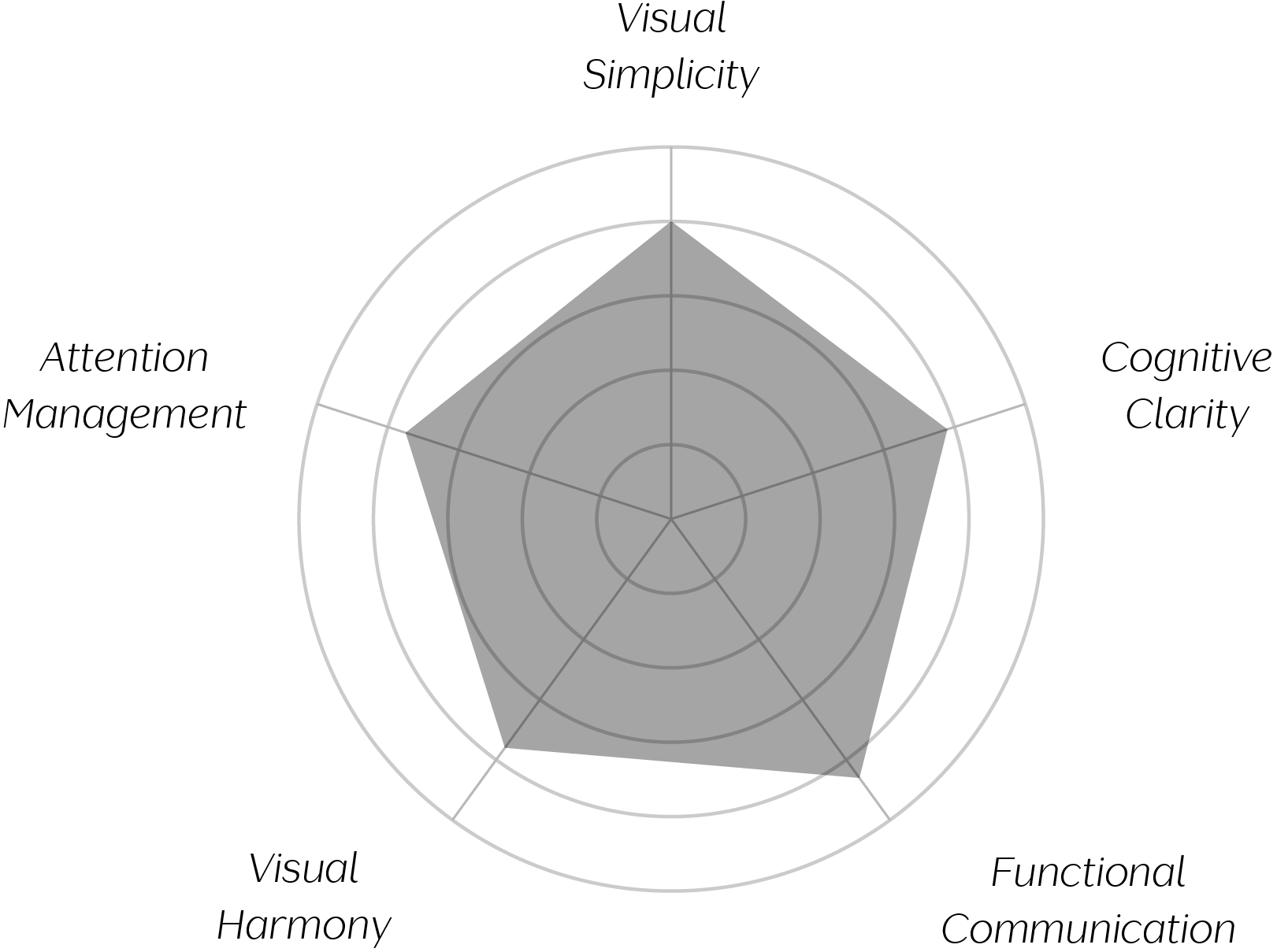
Vand Score 79 / 100
Performance across the five core Vand assessment dimensions.
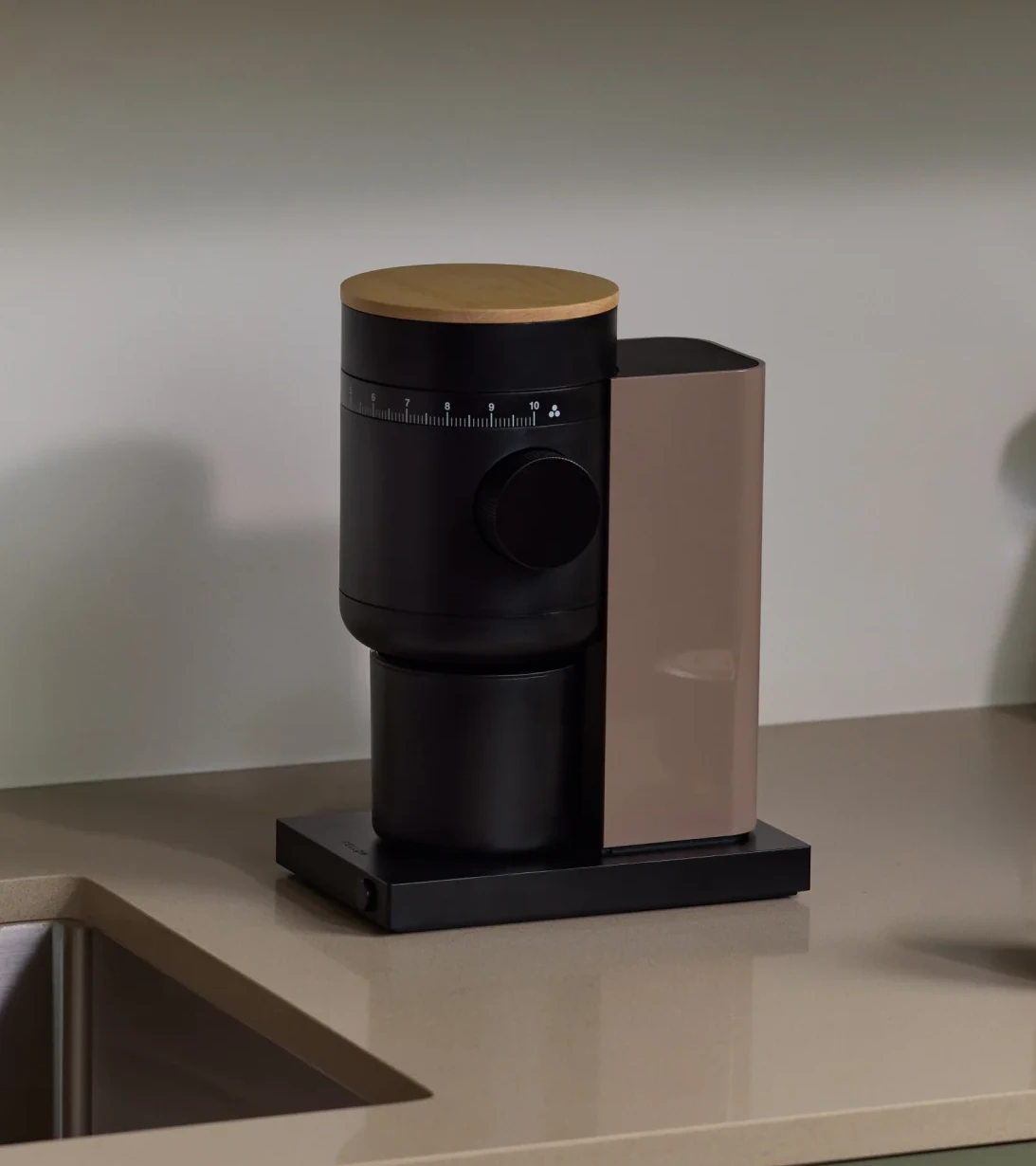
Opus demonstrates that functional information — grind ranges, dosing volumes, adjustment increments — can be printed directly onto an object's surface as a primary design element, turning what is often relegated to a manual into something the object itself teaches.
It also shows the value of a consistent material and finish language across a multi-part system: even where individual forms vary considerably, matte black and matching detailing hold the kit together as a recognisable family.
Most instructively, the design reveals that resolving a product's accessories is not the same task as resolving its core body — a kit can achieve real harmony piece-to-piece while its main housing still asks two different geometric languages to coexist.
The evidence supports certification at Class B. Opus earns real credit for treating functional communication as a design priority rather than an afterthought — its printed grind guide and calibrated dial are genuine achievements in making a technical object legible to a first-time user. Its accessory kit, taken piece by piece, is confidently and consistently designed. What holds the object back from the tier above is its core geometry: the ribbed column and the cylindrical hopper are each well-made ideas that have not yet been asked to fully agree with one another. This is a design that teaches its user clearly and dresses its parts consistently, but has left its main housing as two good ideas placed next to each other rather than one resolved form. As a closing observation: Opus proves that a product can speak fluently about how to use it while still working out exactly what shape it wants to be.